
Drain Cleaning in the USA
Slow drains often start with buildup inside the line. Grease from cooking sticks to pipe walls and traps hair or food particles. Over time the opening shrinks until water backs up into sinks or tubs. Our technicians trace the run from the fixture to the main stack and measure how far the clog sits from the cleanout.
Tree roots enter joints in older sewer lines and grow toward the moisture. They form a dense mat that blocks solids while letting some water pass. A camera inspection shows the exact entry point and root thickness so the right cutting head can be chosen without cutting the pipe itself. Drain cleaning is part of what Number One Plumber of Charlotte does across the USA.
Warning signs of a drain clog
- Water level rises in the tub during a shower
- Gurgling sound comes from the sink after flushing
- Multiple fixtures drain slowly at the same time
- Sewage odor rises from floor drains or toilets
- Toilet water level stays high after flushing
Common causes inside residential lines
Kitchen lines collect grease that cools and hardens on the pipe walls. Each new pour adds another layer until the opening drops below two inches. Our technicians use a power auger with a grease-cutting head sized to the pipe diameter and work from the closest cleanout.
Bathroom lines trap hair and soap residue. The strands wrap around the crossbars in the trap and catch more debris. A manual snake fed through the overflow tube reaches the trap without removing the fixture and clears the hair in one pass.
Main sewer lines outside the house collect roots that enter at bell joints. The roots grow toward the water and form a plug that stops solids. A sectional machine with a root-cutting blade is fed from the exterior cleanout and the debris is flushed afterward.
What our technicians inspect and measure
They start at the affected fixture and check the trap for standing water and debris. A quick measurement of the trap arm length tells them whether the clog sits inside the fixture or farther down the branch line. The same check is repeated at each connected fixture to map the affected section.
Camera footage records pipe material, diameter, and slope. A three-inch cast-iron line with a one-quarter inch per foot fall is noted so the correct cable size and head can be selected. Any offset joints or collapsed sections are marked on the recording for later repair decisions.
Clearing methods and equipment used
For soft clogs a hand or electric snake with a bulb head is run until it breaks through and water flows freely. The head is then pulled back while rotating to scrape the walls. A follow-up flush with hot water removes loosened material.
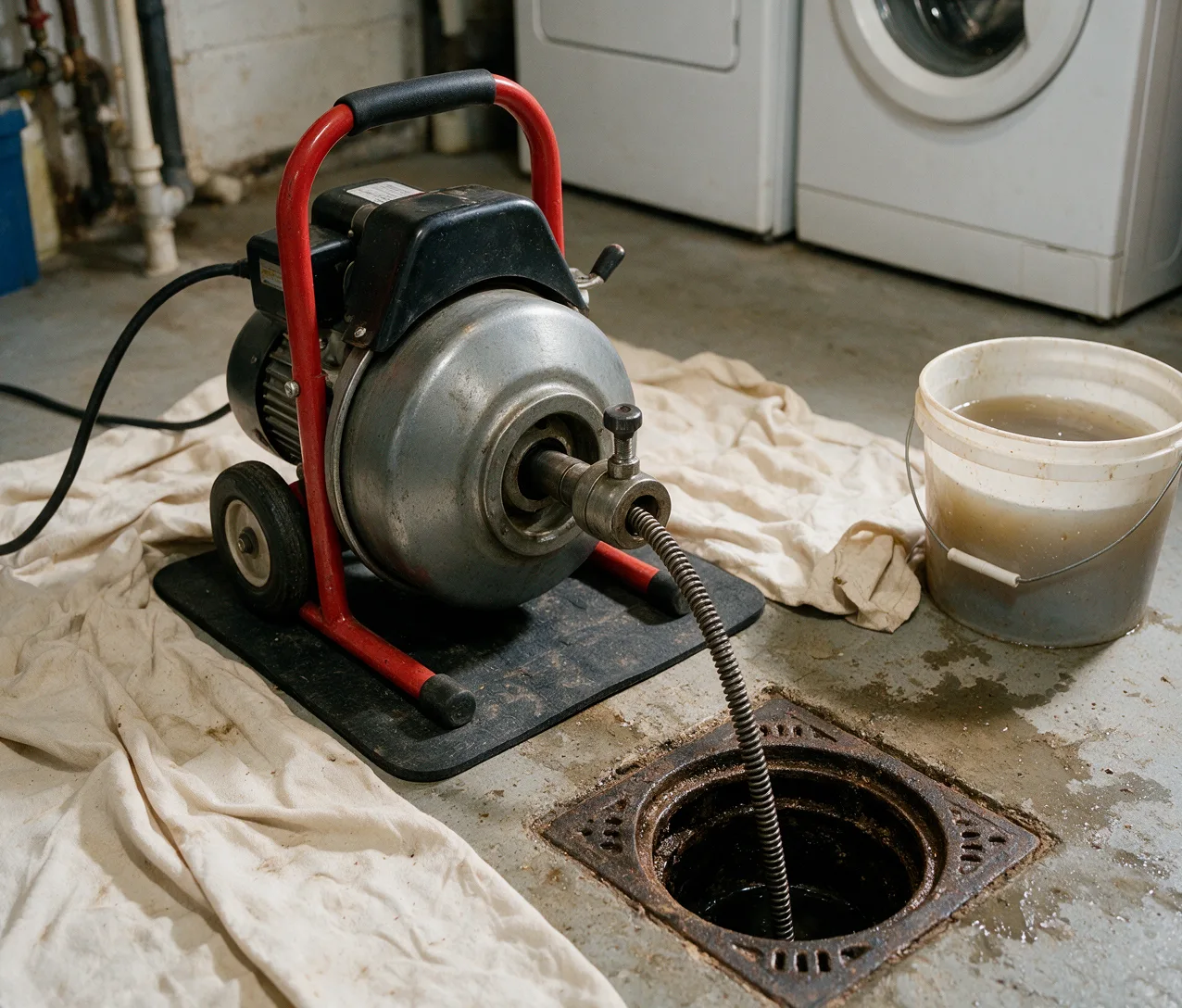
Grease or root clogs require a powered machine with a cutting blade matched to the pipe size. The cable is advanced in short strokes to avoid kinking and the debris is pulled back to the cleanout. The line is then flushed and re-inspected to confirm full diameter is restored.
Steps before the technician arrives
Turn off water to the affected fixture to prevent overflow. Remove the strainer or pop-up and pull out any visible hair or debris with a gloved hand or hook. This keeps additional material from compacting the clog during travel.
Locate the nearest cleanout plug in the basement or outside and clear a two-foot path around it. Place towels or a shallow pan under the plug in case water is present. These steps let the technician begin work immediately upon arrival.
Drain Cleaning questions
How do you choose the right cable size?
Technicians measure the cleanout diameter first. They select a cable that fits without forcing and still carries a head wide enough to contact the pipe walls. A one-quarter-inch cable works in small traps while a three-eighths-inch cable handles three-inch main lines.
Will the line need hydro jetting after the clog is cleared?
Jetting is used when grease coats the walls or when roots leave fibers behind. The technician runs a high-pressure nozzle through the line at 3000 to 4000 psi and records the flow rate afterward. If the pipe returns to full bore the job is complete.
Can a homeowner safely use chemical drain cleaners first?
Chemical products can damage older pipes and often fail to reach the actual clog. If the product sits in the trap it can create a hazardous mixture when the technician opens the line. Mechanical clearing avoids these risks and leaves the pipe undamaged.
What happens if the camera shows a collapsed section?
The technician notes the location and length of the damaged pipe. A repair crew can then excavate only that section or install a liner from the nearest access point. The drain is left clear until the permanent fix is scheduled.
Schedule Drain Cleaning
Call our technicians to clear the line and restore flow before water backs up further.