
Pipe Repair in the USA
Pipe Repair begins when a homeowner notices reduced pressure or damp spots on walls and floors. We trace the line with cameras and listening devices to find the exact break without unnecessary digging. Early checks include testing static pressure at multiple fixtures and noting any color changes in the water.
Soil movement or repeated freeze cycles often crack older galvanized lines at joints. Our technicians mark the affected run and decide whether a targeted sleeve or full reroute will hold long term. Homeowners can shut off the main valve and open a downstream faucet to drain standing water before arrival. Number One Plumber of Charlotte schedules pipe repair visits throughout the USA.
Visible and Audible Signs of Pipe Failure
- Water stains appear on ceilings directly below bathrooms.
- Hissing or dripping sounds continue after all fixtures are off.
- Water meter spins when no taps or appliances are running.
- Low flow from one shower while other fixtures run normal.
- Rust particles show up in the toilet tank after flushing.
Common Causes of Pipe Damage
Tree roots enter joints seeking moisture and widen small gaps until the pipe collapses. Shifting soil from heavy rain or drought bends older lines until they kink or separate. Corrosion eats through galvanized steel from the inside, leaving thin walls that burst under normal pressure.
Improper slope on drain lines causes standing water that accelerates rust. Our technicians measure pitch with a level and note any low spots that trap debris. Hard water scale builds inside supply lines and narrows the opening until pressure drops at the farthest fixture.
Inspection Steps Our Technicians Follow
We start at the meter and work toward the farthest outlet, checking every accessible joint for moisture or discoloration. A pressure gauge records static and flowing readings at two points to calculate any drop across the suspected section. Camera inspection shows interior scale, root intrusion, or cracks that cannot be seen from outside.
We also listen with electronic amplifiers along the slab edge to pinpoint active leaks without breaking concrete. Measurements include pipe diameter, wall thickness where accessible, and distance to the nearest cleanout. These numbers determine whether a clamp, epoxy sleeve, or full segment replacement is required.
Repair and Replacement Choices
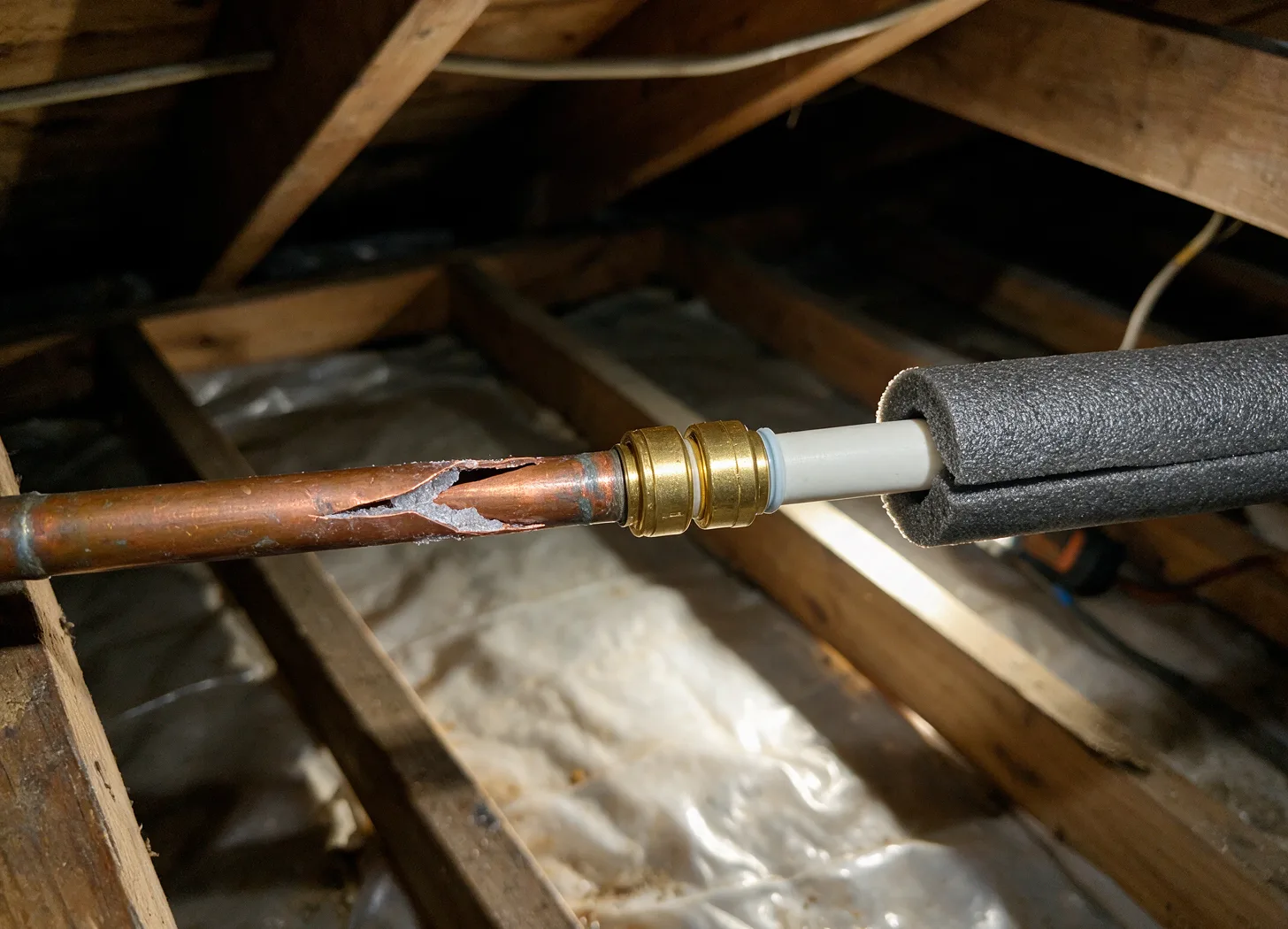
Small pinhole leaks in copper often receive a soldered coupling or compression sleeve when the surrounding pipe is still sound. Larger damaged runs are cut out and replaced with matching material to maintain flow capacity. When multiple joints have failed, we reroute the line through an attic or crawl space to avoid repeated excavation.
Homeowners decide between a spot repair that leaves the rest of the line untouched or a partial repipe that removes the weakest sections. We explain how each option affects future access and water quality. The choice depends on the remaining pipe condition measured during inspection.
Materials and Parts We Carry
Type L copper remains the standard for exposed supply lines because it resists corrosion better than older galvanized steel. Schedule 40 PVC works for drain lines where code allows and provides smooth interior walls that resist root entry. We stock crimp rings, push-fit fittings, and rubber repair couplings sized for common diameters.
Epoxy-coated sleeves reinforce weakened sections without removing the original pipe when access is tight. We select lead-free solder and flux for all potable water connections. Spare shutoff valves and dielectric unions are on the truck so mixed-metal connections can be isolated on the spot.
Pipe Repair questions
How do you find a leak inside a slab?
We run a camera through cleanouts and use acoustic sensors along the foundation edge. Pressure tests isolate the section, then small access holes allow us to confirm the exact spot before any larger opening is made.
Can a leaking pipe be patched without replacing the whole run?
Yes when the damage is limited to one joint or a short stretch. We cut out the bad area and install a new coupling or sleeve using the same pipe material so flow and pressure stay consistent with the rest of the system.
What should I do while waiting for the technician?
Turn off the main shutoff valve and open the lowest faucet to drain the line. Place towels or a bucket under any visible drip and avoid running water at any fixture until we arrive.
Will new pipe match the existing material?
We match copper to copper and PVC to PVC on supply and drain lines. Transition fittings are used only where the original material has been discontinued, and dielectric unions prevent corrosion at any copper-to-steel connection.
Book Pipe Repair
Call to schedule Pipe Repair and give our technicians the details of your water pressure loss or visible leak.