
Repiping in the USA
Old supply lines in walls and under slabs lose capacity over time. Galvanized steel develops interior rust that narrows the opening. Copper develops pinhole leaks at joints after decades of thermal movement. When these lines fail repeatedly our technicians plan a complete replacement rather than repeated spot repairs. The process removes the old runs and installs new pipe sized for current fixture demands.
Repiping can be done from the main shutoff valve outward or limited to problem branches. Our technicians first map every accessible line with a camera and pressure test. They then decide whether to open walls or pull new lines through existing chases. Homeowners keep water shut off at the main during active leaks until the crew arrives. Number One Plumber of Charlotte covers repiping jobs in the USA.
Warning Signs of Pipe Failure
- Water pressure drops noticeably when two or more fixtures run at the same time.
- Brown or yellow water flows from taps after the water has sat unused overnight.
- Visible moisture stains appear on ceilings or walls near supply pipe routes.
- Repeated pinhole leaks develop in the same section of copper line within months.
- Knocking or banging sounds occur in walls when cold water is turned on suddenly.
Common Causes Leading to Full Repiping
Galvanized steel pipe installed before 1970 rusts from the inside out. The rust flakes reduce diameter and trap sediment that further restricts flow. Once flow drops below household needs the only lasting fix is removal of the entire run.
Copper tubing develops leaks where flux was over-applied or where the pipe rests against dissimilar metals. Slab leaks often trace to improper sleeving where the line enters the concrete. Repeated repairs at multiple joints signal that the whole system has reached replacement age.
CPVC can become brittle after years of hot water exposure and develop stress cracks at elbows. When cracks appear in several locations technicians recommend repiping rather than chasing individual failures.
Inspection Points Our Technicians Measure
Technicians start at the meter and work toward each fixture. They record static pressure at the main and then at the farthest tap. A drop greater than ten pounds indicates excessive restriction somewhere in the line.
They measure pipe outside diameter and wall thickness with calipers at exposed points. They also note the type of fittings used and any visible corrosion scale. Camera inspection through cleanouts reveals interior condition and locates offsets that complicate pulling new pipe.
Flow rate is checked at the water heater outlet and at the kitchen sink. Technicians note temperature loss along long horizontal runs that may require insulation after repiping.
Material Options for New Pipe Runs
Copper type L remains the choice where lines will stay exposed or where maximum durability is required. It solders cleanly and resists nail penetration better than softer materials. Our technicians size it one step larger than the original when adding fixtures.
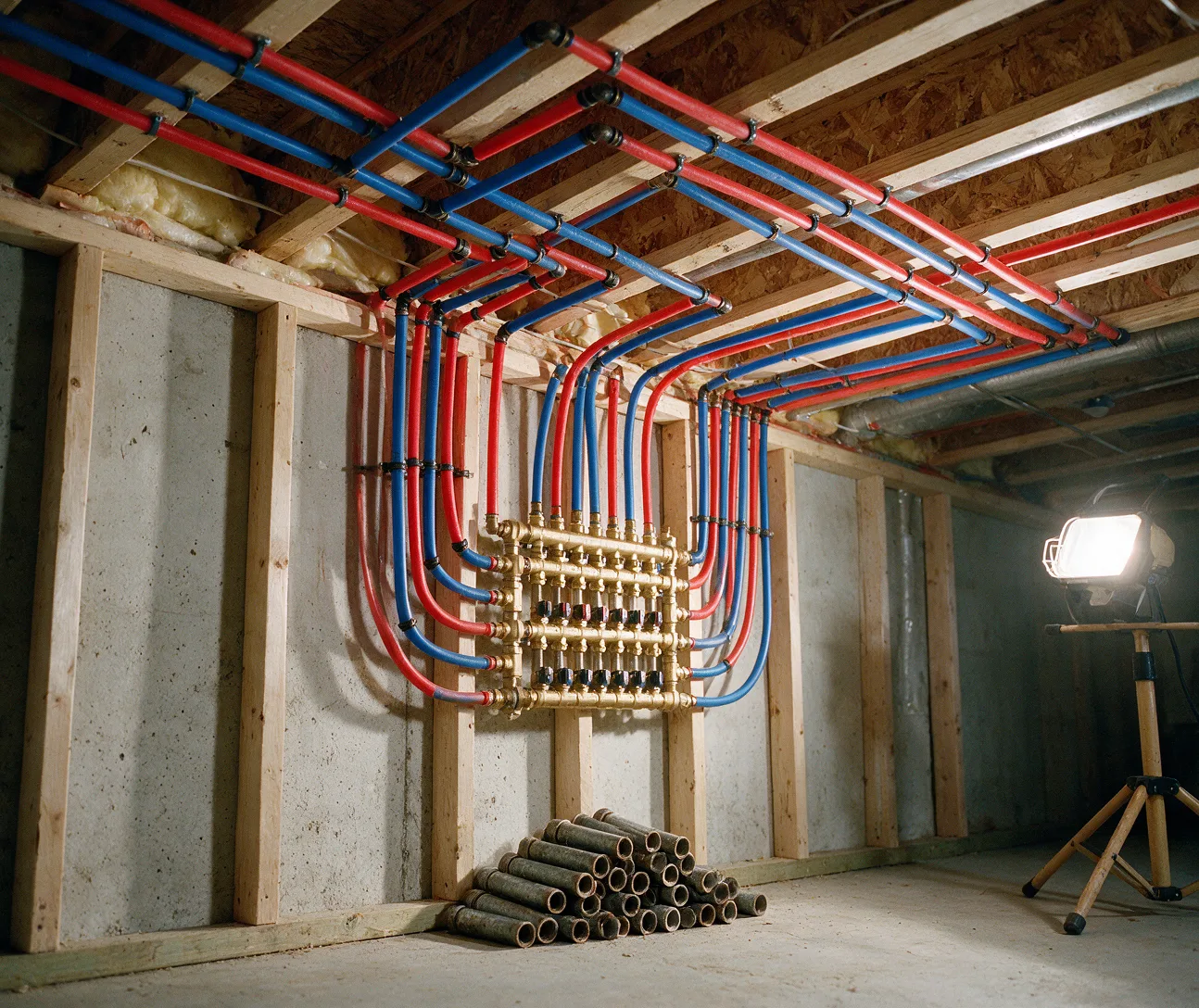
PEX tubing allows longer continuous runs with fewer joints. It expands slightly if a freeze occurs and pulls easily through existing holes. Technicians use crimp or expansion fittings rated for the local water chemistry.
Uponor or similar expansion systems reduce leak points at connections. Manifolds placed near the water heater give each fixture its own shutoff for future service work.
Actions Homeowners Take at the First Sign
Locate the main shutoff valve before any leak worsens. Turn it clockwise until it stops and then open a faucet at the lowest point to drain pressure from the lines. This step prevents further water damage while waiting for the crew.
Avoid running the disposal or dishwasher if the leak is near the kitchen. Note which fixtures lose pressure first so the technicians can prioritize that branch during the initial assessment.
Photograph any visible stains or active drips. These images help the crew decide whether to open drywall from above or below before they arrive with tools and materials.
Repiping questions
How long does repiping usually take?
A full single-story home takes three to five working days. Crews open access points one day, pull and connect the new lines the next, then restore walls. Two-story homes or slab work add one or two days depending on access.
Can we stay in the house during repiping?
Water is off for most of each day. We restore service to one bathroom at night so the home remains usable. Dust from wall openings stays contained with plastic sheeting and daily cleanup.
Which material lasts longest in hard water areas?
Copper type L resists scale buildup better than plastic when water hardness exceeds fifteen grains. PEX works well when the water is treated or when longer runs without joints are needed. Technicians test hardness on site before recommending.
Do you replace the main line from the street too?
Yes when the meter to house line shows the same corrosion or restriction. We excavate only the section inside the property line and coordinate with the utility for the portion they own.
Schedule Repiping Assessment
Tell us the age of your home and which fixtures lose pressure first. Our technicians will map the lines and outline material choices.